ioki | Website Systembild | Logo negativ

/ Reading: 3 min.

26. Jan 2022
/ Germany
API integration – the ioki software in external systems
What is behind the ioki API? “We are continuously working on our data storage and also on the connection and integration of our system into external systems,” says Andreas Schwarzkopf, Head of Backend Engineering at ioki. The Application Programming Interface, or API, can be used to integrate software into external systems. In the ioki case, this means integrating our operating system for digital mobility primarily into external Mobility as a Service (MaaS) platforms.

The API benefit

The overarching goal of making mobility usable for everyone is also behind the specially developed ioki platform API. The new interface allows us and our partners to develop different use cases. Our journey offers should not only be displayed in other apps. The goal is to achieve deep integration and thus enable a holistic mobility offer. Through deep integration, end customers can immediately book our offer in the app of partners – with the ioki system running in the background.

API components

The lynchpin of API integration is the ioki developer programme. As part of the developer programme, our partners are provided with all the information it takes to integrate and continuously develop the API. The documentation consists of an API Guide, Passenger API, Driver API, Platform API and Webhooks. The API guide contains all the design principles required for integration. In the Passenger and Driver API, all elements for programming the respective application are made available to our partners. While the Passenger and Driver APIs are used by clients running on mobile devices, the Platform API is our interface for full integration with external backends.

Software integration in practice

In 2021, ioki set a milestone with the first deep integration of ioki software into the Mobimeo MaaS app. Here, on-demand rides can be booked directly in the Mobimeo app. The implementation of the technical solution was the first cooperation between the two Deutsche Bahn subsidiaries in a joint project. “The successful integration of our interfaces by Mobimeo proves that the planned software architecture changes and data models of the ioki platform can be used in practice by other companies. This is not a test project or a feasibility study, but a real product that is now on the market and moves people,” says Andreas Schwarzkopf.
Latest article

The Invisible Cost Factor: How Inefficient Driver Onboarding Slows Down Your Bus Company

The Invisible Cost Factor: How Inefficient Driver Onboarding Slows Down Your Bus Company

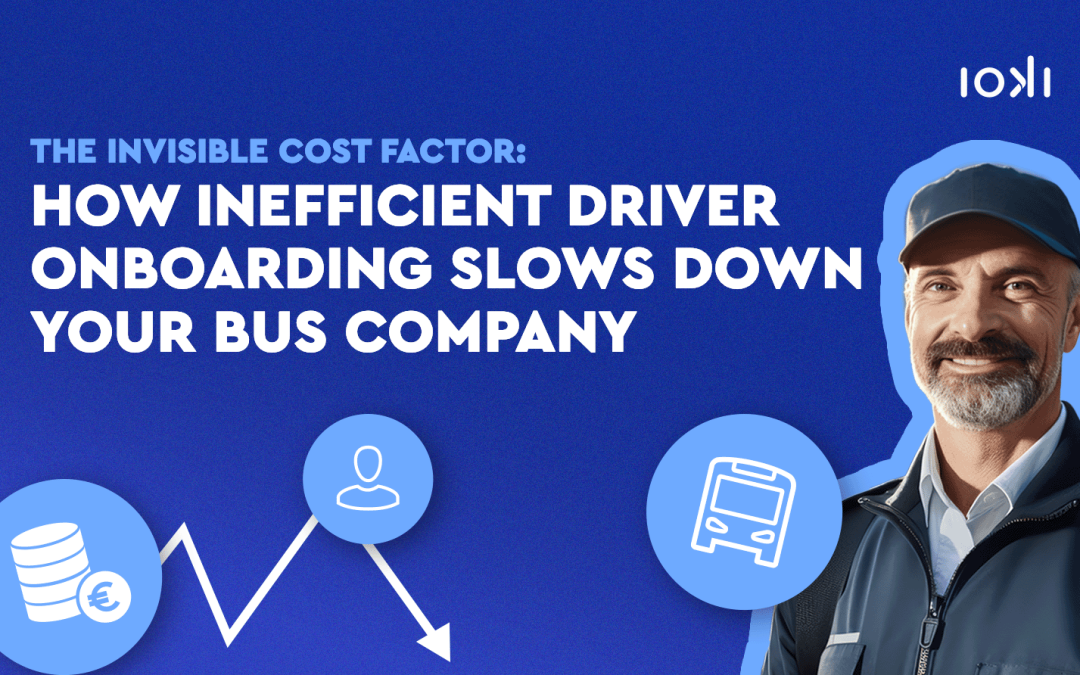
Today, bus companies are facing enormous challenges. The shortage of qualified drivers is an urgent issue that threatens the efficiency and safe operation of public transport. According to the Federal Association of German Bus Companies (BDO), there is already a shortage of around 20,000 bus drivers across Germany, and this number could rise to as many as 65,000 by 2030 if no countermeasures are taken. In Europe, the figure is even higher, with 105,000 unfilled positions for bus drivers, as evidenced by the IRU’s 2023 European Bus and Coach Driver Shortage Report. Over 80% of companies report significant or very significant difficulties in filling open positions. A central aspect that is often overlooked is the inefficient onboarding of new driving staff, which not only costs time and money but also increases turnover and poses potential safety risks.

Related articles

The Invisible Cost Factor: How Inefficient Driver Onboarding Slows Down Your Bus Company

The Invisible Cost Factor: How Inefficient Driver Onboarding Slows Down Your Bus Company

Today, bus companies are facing enormous challenges. The shortage of qualified drivers is an urgent issue that threatens the efficiency and safe operation of public transport. According to the Federal Association of German Bus Companies (BDO), there is already a shortage of around 20,000 bus drivers across Germany, and this number could rise to as many as 65,000 by 2030 if no countermeasures are taken. In Europe, the figure is even higher, with 105,000 unfilled positions for bus drivers, as evidenced by the IRU’s 2023 European Bus and Coach Driver Shortage Report. Over 80% of companies report significant or very significant difficulties in filling open positions. A central aspect that is often overlooked is the inefficient onboarding of new driving staff, which not only costs time and money but also increases turnover and poses potential safety risks.

New Product Updates: Efficient Timetable Integration and Multilingual Communication

New Product Updates: Efficient Timetable Integration and Multilingual Communication

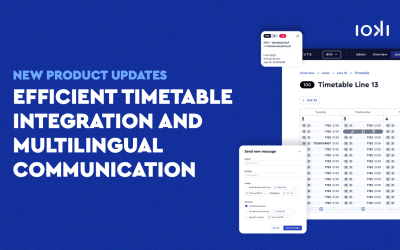
In the dynamic world of public transport, ioki is taking another step toward digital transformation: our new generation of software for ioki Route is improving communication and planning between drivers and control centres. With two key features—timetable integration and driver messaging—we are setting new standards for efficiency and collaboration in public transport.