ioki | Website Systembild | Logo negativ

/ Reading: 4 min.

21. Jan 2026
/ Germany
New Product Updates: Efficient Timetable Integration and Multilingual Communication
In the dynamic world of public transport, ioki is taking another step toward digital transformation: our new generation of software for ioki Route is improving communication and planning between drivers and control centres. With two key features—timetable integration and driver messaging—we are setting new standards for efficiency and collaboration in public transport.

Efficient Timetable IntegrationBETA

Adhering to timetables is a critical challenge for drivers. Deviations can result in penalties and decreased customer satisfaction. The Timetable Integration feature of ioki Route addresses this issue by allowing for the direct integration of timetables into route navigation, making deviations transparent.

  • Real-time Monitoring: The app displays scheduled and actual times to drivers, while deviations are shown in real-time on the web application ioki Route Control on the live map. This enables operations management to take swift and targeted countermeasures.


  • Flexible Timetable Management: Timetables can be created, edited, or imported in ISA or GTFS format. This supports all line bus operations, particularly those with outdated on-board computers.
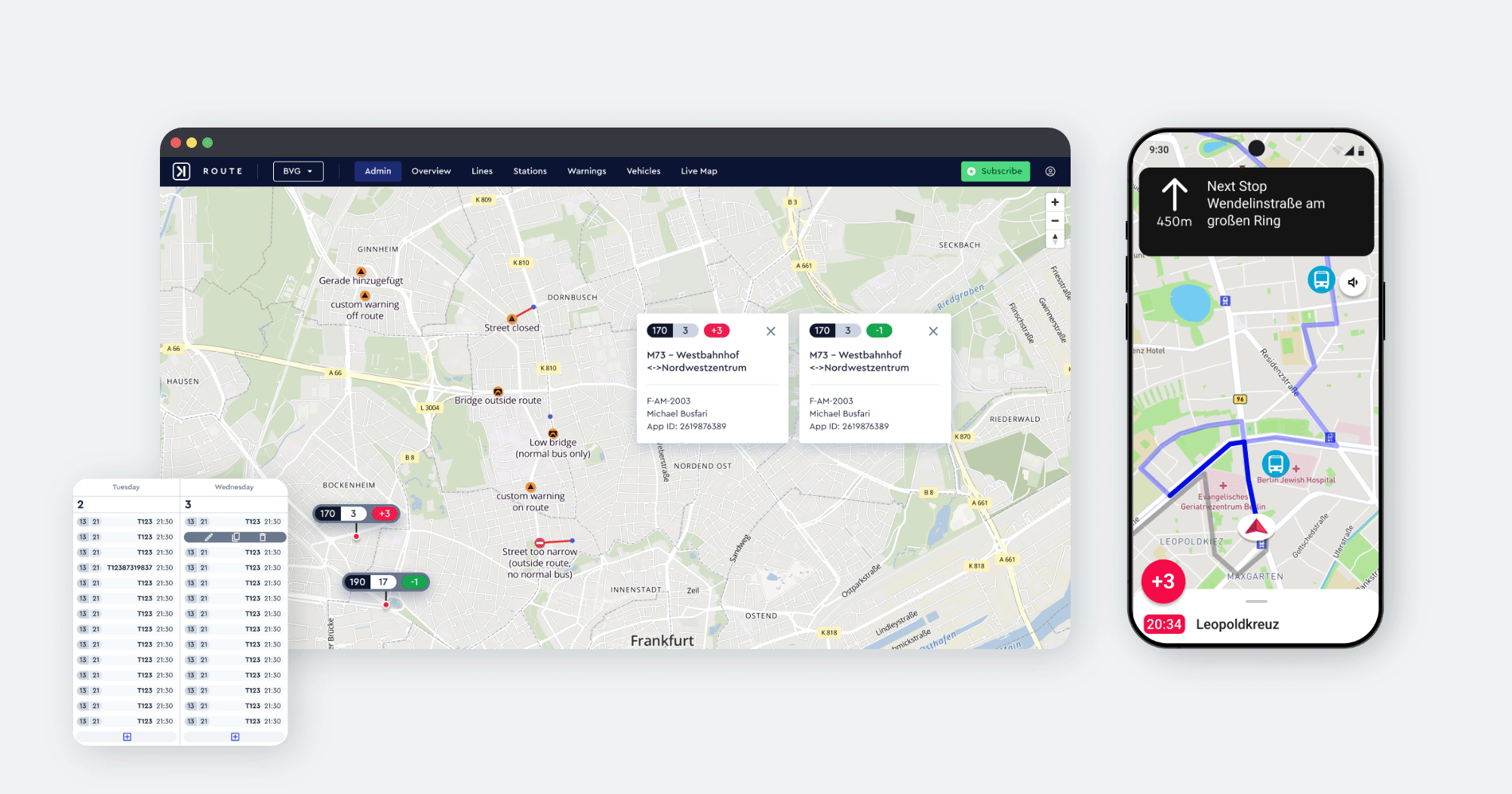
ioki Route – Timetable Feature

The timetable integration will be exclusively available to customers with an ioki Route Pro access starting from September.

Multilingual Communication through Driver MessagingComing soon

Effective communication between operations management and drivers is essential. However, this often occurs through unreliable channels such as private messaging services or paper notices. The new Driver Messaging feature of ioki Route provides an integrated solution that simplifies communication and overcomes language barriers.

  • Automatic Translation: Messages from the control centre to drivers are automatically translated into the set driver messages, supporting 20 European languages. This is particularly beneficial for bus operations with foreign drivers.


  • Reliable Communication: While many on-board computers offer messaging functions, the automatic translation is a unique feature of our product.
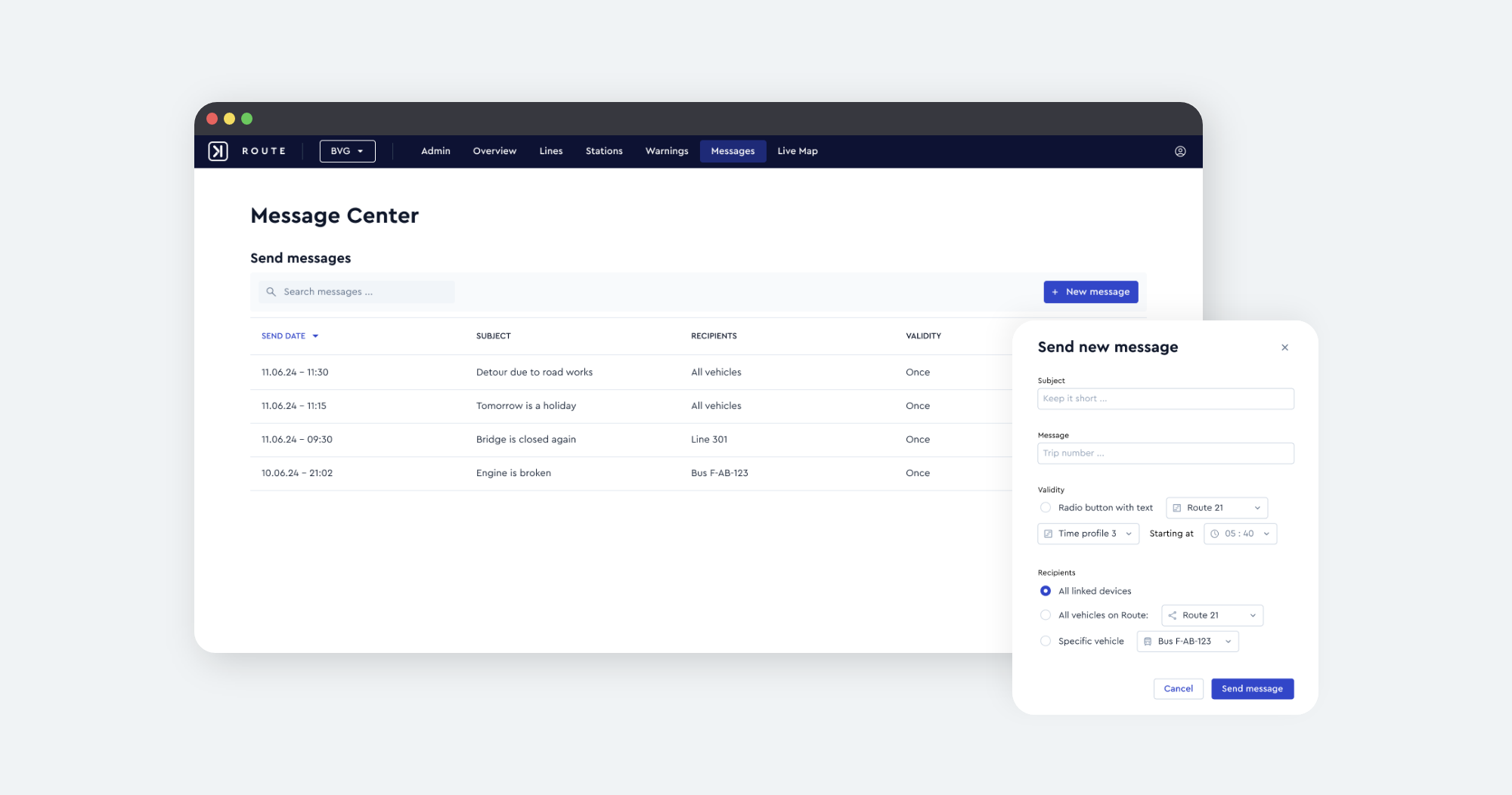
ioki Route - Driver Messaging

Successful Implementation of the Software in Germany and Italy

In Germany, numerous bus companies are already using ioki Route in daily operations, including Hessische Landesbahn and Offenbacher Verkehrsbetriebe. In Italy, 10 transport companies have tested the software informally and are currently considering regular use in their line operations. Positive feedback from control centres and directly from drivers demonstrates the efficiency and user-friendliness of the ioki Route solutions.

“The integration of timetables and multilingual communication is crucial for ensuring efficiency and safety in bus operations. With the enhancements of ioki Route, we offer software that meets these challenges and makes life easier for staff on the road and in the control centre.”

Stefan Winter

Senior Product Manager at ioki

Ready to Enhance Your Public Transport Operations?

Discover how ioki Route can optimise your bus navigation and route management. Contact us today to schedule a demo and see the benefits for yourself!
Latest article

The Invisible Cost Factor: How Inefficient Driver Onboarding Slows Down Your Bus Company

The Invisible Cost Factor: How Inefficient Driver Onboarding Slows Down Your Bus Company

Today, bus companies are facing enormous challenges. The shortage of qualified drivers is an urgent issue that threatens the efficiency and safe operation of public transport. According to the Federal Association of German Bus Companies (BDO), there is already a shortage of around 20,000 bus drivers across Germany, and this number could rise to as many as 65,000 by 2030 if no countermeasures are taken. In Europe, the figure is even higher, with 105,000 unfilled positions for bus drivers, as evidenced by the IRU’s 2023 European Bus and Coach Driver Shortage Report. Over 80% of companies report significant or very significant difficulties in filling open positions. A central aspect that is often overlooked is the inefficient onboarding of new driving staff, which not only costs time and money but also increases turnover and poses potential safety risks.

Related articles

The Invisible Cost Factor: How Inefficient Driver Onboarding Slows Down Your Bus Company

The Invisible Cost Factor: How Inefficient Driver Onboarding Slows Down Your Bus Company

Today, bus companies are facing enormous challenges. The shortage of qualified drivers is an urgent issue that threatens the efficiency and safe operation of public transport. According to the Federal Association of German Bus Companies (BDO), there is already a shortage of around 20,000 bus drivers across Germany, and this number could rise to as many as 65,000 by 2030 if no countermeasures are taken. In Europe, the figure is even higher, with 105,000 unfilled positions for bus drivers, as evidenced by the IRU’s 2023 European Bus and Coach Driver Shortage Report. Over 80% of companies report significant or very significant difficulties in filling open positions. A central aspect that is often overlooked is the inefficient onboarding of new driving staff, which not only costs time and money but also increases turnover and poses potential safety risks.

What is the difference between dial-a-ride services and public transport taxis?

What is the difference between dial-a-ride services and public transport taxis?

Flexible mobility solutions, such as demand-responsive transport (DRT), are becoming increasingly important – particularly in areas where traditional scheduled bus services are not financially viable. Two terms often used in the context of DRT are “dial-a-ride” and “public transport taxi”. But what exactly distinguishes these services?