ioki | Website Systembild | Logo negativ

/ Reading: 3 min.

30. Sep 2019
/ Deutschland
This was our first IMN Business Club!
How to mobilise employees – this question was the core issue of our first ioki Mobility Network Business Club.
In a relaxed living room atmosphere, we discussed the challenges of the new working environment together with experts from business and science, reflected on existing mobility offers for employees and jointly developed new solutions for today and tomorrow.

Prof. Jutta Rump, one of the 40 leading HR minds in Germany, kicked off the successful evening with a keynote lecture on the topic of employability. Based on the megatrends of demographic, technical and social development, Rump described a constantly changing working environment characterized by volatility, uncertainty, complexity and ambiguity (VUCA). Within the framework of such a transformation process, employees and staff alike face challenges that can be compensated by measures such as employability. Under the premise of “staying in motion without losing balance”, Rump finally introduced the concept of employability as a stability-giving element in a continuously changing working environment.

In the following panel discussion with Dr. André Bruns from RheinMain University, Dr. Andreas Dreyer from Continental, Dr. Kerim Galal from DEKRA Digital and Kerstin Oberhaus from evonik, this observation was reviewed from a business point of view and discussed in the context of a lively exchange about the significance of employee mobility. The panel covered both: The major questions, such as the responsibility of companies in traffic turnaround, but also left enough room for detailed questions and practical examples. From the imminent end of the classic company car, to mobility budgets, to multimodal and individual concepts – the individual contributions testified that the topic of employee mobility has definitely arrived in the companies. In the end, everyone agreed: No matter how we tackle the current challenges and problems of mobility – the exchange with employees and a demand-oriented approach are basic prerequisites for a successful employee mobility.

Following the panel discussion and exciting impulses from the audience, we started into a relaxed networking session and enjoyed some newly interpreted regional classics such as “Grüne Soße” and “Handkäsburger”.

We would like to thank our partner DEKRA for realizing the first ioki Mobility Network Business Club with us, Prof. Rump for the inspiring keynote speech, all panel participants for sharing their perspectives and experiences and all guests for their active participation in the discussion and their visit to our ioki office.

We are already looking forward to the next Business Club! Stay tuned!
Latest article

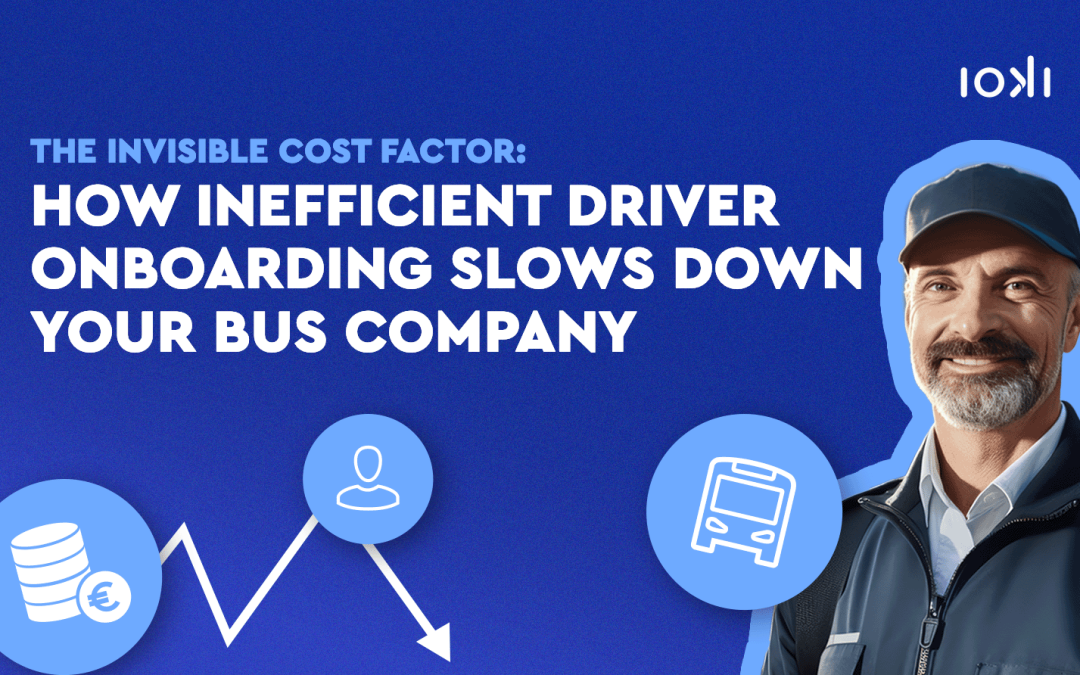
The Invisible Cost Factor: How Inefficient Driver Onboarding Slows Down Your Bus Company

The Invisible Cost Factor: How Inefficient Driver Onboarding Slows Down Your Bus Company

Today, bus companies are facing enormous challenges. The shortage of qualified drivers is an urgent issue that threatens the efficiency and safe operation of public transport. According to the Federal Association of German Bus Companies (BDO), there is already a shortage of around 20,000 bus drivers across Germany, and this number could rise to as many as 65,000 by 2030 if no countermeasures are taken. In Europe, the figure is even higher, with 105,000 unfilled positions for bus drivers, as evidenced by the IRU’s 2023 European Bus and Coach Driver Shortage Report. Over 80% of companies report significant or very significant difficulties in filling open positions. A central aspect that is often overlooked is the inefficient onboarding of new driving staff, which not only costs time and money but also increases turnover and poses potential safety risks.

Related articles

Digital Mobility on the Move – Insights from the Smart Country Convention 2025

Digital Mobility on the Move – Insights from the Smart Country Convention 2025

Imagine a city where citizens purchase their bus ticket directly through a service app, book an on-demand shuttle, and effortlessly switch between various modes of transport – without needing additional apps or complex logins. This vision was presented by our colleague Maximilian Rütten and Linus Frank from our partner Vesputi at the Smart Country Convention (SCCON) 2025.

What will the future of the mobility ecosystem look like? IAA 2025, Zeit Konferenz Neue Mobilität, Zukunft Nahverkehr

What will the future of the mobility ecosystem look like? IAA 2025, Zeit Konferenz Neue Mobilität, Zukunft Nahverkehr

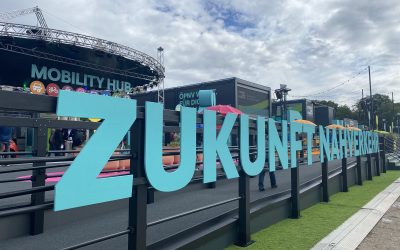
Last week, Munich was the hub of the mobility world, hosting several mobility events such as IAA Mobility, the Zeit Conference “New Mobility” and Zukunft Nahverkehr as an open space on Königsplatz – the Bavarian capital became the scene of intensive discussions about the mobility of tomorrow. We were right in the thick of things, gaining an understanding of what is driving mobility